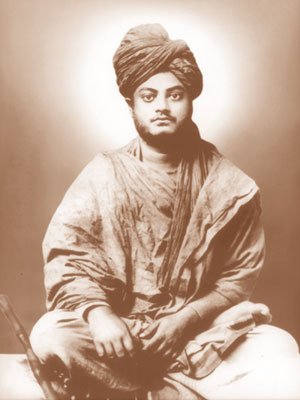
Swami Vivekananda (1863–1902)
Swami Vivekananda (1863–1902), born Narendranath Datta on 12 January 1863 in Calcutta, was the chief disciple of Sri Ramakrishna Paramahamsa and one of the most influential spiritual figures of the modern age. Possessed of a brilliant intellect, a deep spiritual nature, and immense physical vitality, Narendranath was drawn to Sri Ramakrishna and was profoundly transformed by his contact with the Master.
After Sri Ramakrishna's passing in 1886, Swamiji took the vow of monasticism and spent years wandering across India as a parivrajaka — a wandering monk — coming into direct contact with the poverty, suffering, and spiritual potential of the Indian masses. This experience kindled in him a burning desire to serve the poor as living manifestations of God.
Parliament of Religions, Chicago, 1893
In 1893, Swami Vivekananda represented Hinduism at the Parliament of the World's Religions in Chicago. His famous opening words — “Sisters and Brothers of America” — electrified the audience and earned him a standing ovation. His addresses at the Parliament brought the universal message of Vedanta to the Western world for the first time and established him as a towering representative of Indian spirituality and culture.
Over the next three years Swamiji toured America and England, delivering lectures and establishing Vedanta Societies. He returned to India in 1897 to a hero's welcome, and his reception across the country was unprecedented. His lectures during this tour electrified Indians with a new sense of pride in their spiritual heritage and a call to serve the nation.
“Sisters and Brothers of America — it fills my heart with joy unspeakable to rise in response to the warm and cordial welcome which you have given us. I thank you in the name of the most ancient order of monks in the world; I thank you in the name of the mother of religions; and I thank you in the name of millions and millions of Hindu people of all classes and sects.”
— Parliament of the World's Religions, Chicago, 11 September 1893
Founding the Ramakrishna Mission
On his return to India, Swami Vivekananda founded the Ramakrishna Mission on 1 May 1897, with the twin ideals of the realization of God and the service of man. The Mission was to embody his vision of Practical Vedanta — applying the highest spiritual truths to the practical work of alleviating human suffering and uplifting society.
In 1898 he established the Belur Math on the western bank of the Ganges near Calcutta, which became the headquarters of the Ramakrishna Math and Mission. Despite a rapidly failing body, he poured himself into the work of organizing the Order, training disciples, writing, and lecturing.
Swami Vivekananda passed away on 4 July 1902 at the age of thirty-nine. His brief but blazing life of service, scholarship, and spiritual fire transformed the spiritual landscape of India and the world. His message of the divinity of the soul, the harmony of religions, and the service of man as the worship of God continues to inspire millions.
Swamiji's Visit to Belagavi
During his parivrajaka days, Swami Vivekananda visited Belagavi from 16 to 27 October 1892 and stayed as a guest of two families in the city. Learn more about this remarkable visit and the impressions Swamiji left on those who were fortunate enough to meet him.
Read About Swamiji in Belagavi ›